The Art (not Science) of Watering Your Landscape
You have just invested in having us install new trees, shrubs, perennials, and/or annuals in your landscape and we would love them to survive! Watering these plantings properly is the most important factor in ensuring your new landscape thrives.
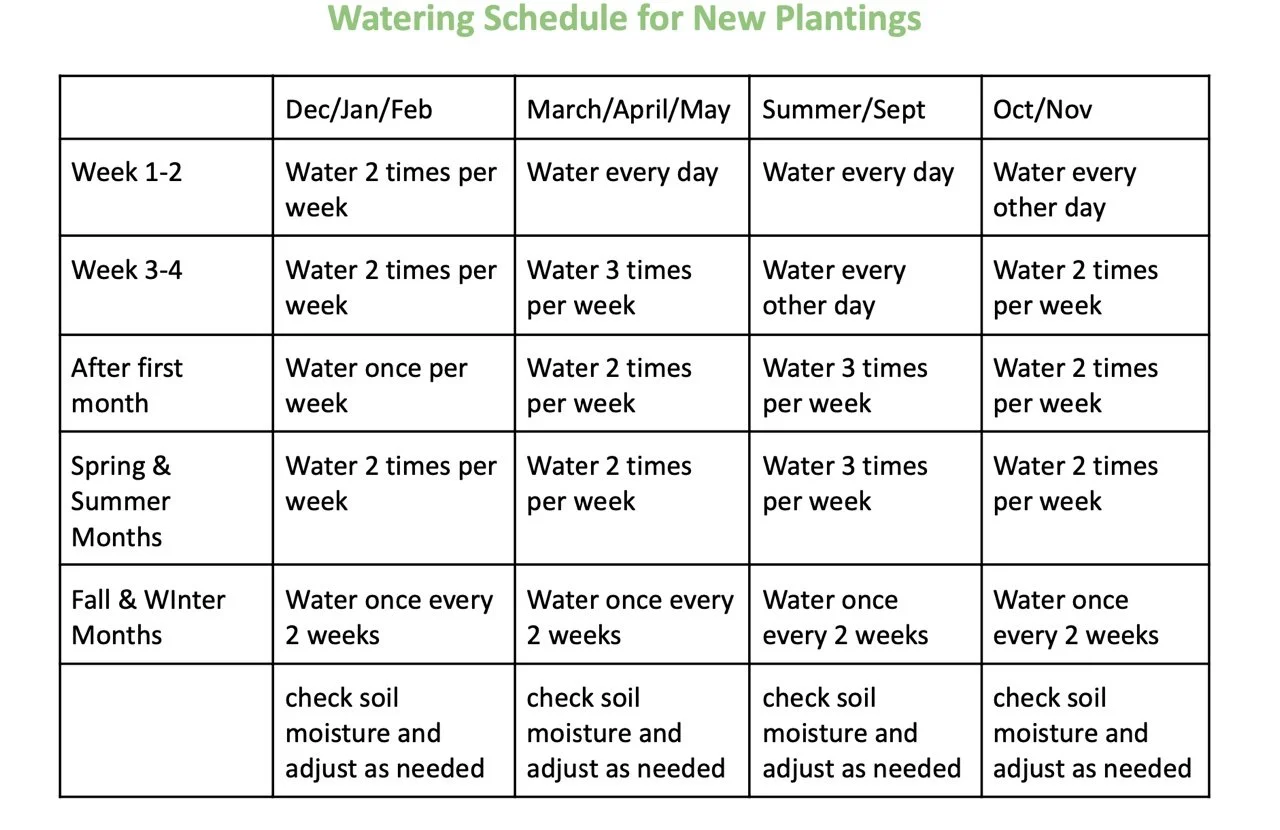
Newly planted landscapes require more water than established landscapes. Be sure to water well in the beginning and taper the watering as plants become firmly established.
Smart Watering
● When hand watering, water at the base of the plants instead of over the top of the leaves. This allows more water to reach the plant roots before evaporating and discourages plant diseases by keeping the leaves drier.
● Water as slow as possible. The water does not need to run off but it needs to fully saturate the area around the rootball.
● Water deep and less frequently. Lightly watering plants every day does not encourage a deep root system that plants need to better withstand dry periods. Instead soak the soil to a depth of at least 6 inches to encourage roots to seek water.
● Water in the early morning instead of mid-day to reduce water loss to evaporation.
● Many plants are often tougher than we give them credit for. All plants will need routine watering after planting to get them established for usually the first year. However, established trees and shrubs should be able to thrive without regular watering unless we have a serious drought.
● Touch the soil to determine when to water. Moist soil will hold better together in a ball than dry soil. Avoid watering on a schedule just for the sake of watering.
● Switch overhead watering to soaker hoses or drip irrigation when possible. This can reduce landscape water use by up to 50%. Much water from overhead watering is lost to evaporation before it even reaches the plant roots. NC State Cooperative Extension
● At medium pressure it will take 5 mins to produce 10 gallons of water